At Rizzoli a new therapy option
March 11th, 2025TAME (Transcatheter Arterial Micro-Embolization) is the name of the technique used for the treatment of degenerative inflammatory diseases of the joints (arthrosis) recently introduced at the Rizzoli Orthopaedic Institute in Bologna.
There are 8 interventions so far performed at Rizzoli on patients suffering from these pathologies at the knee level.
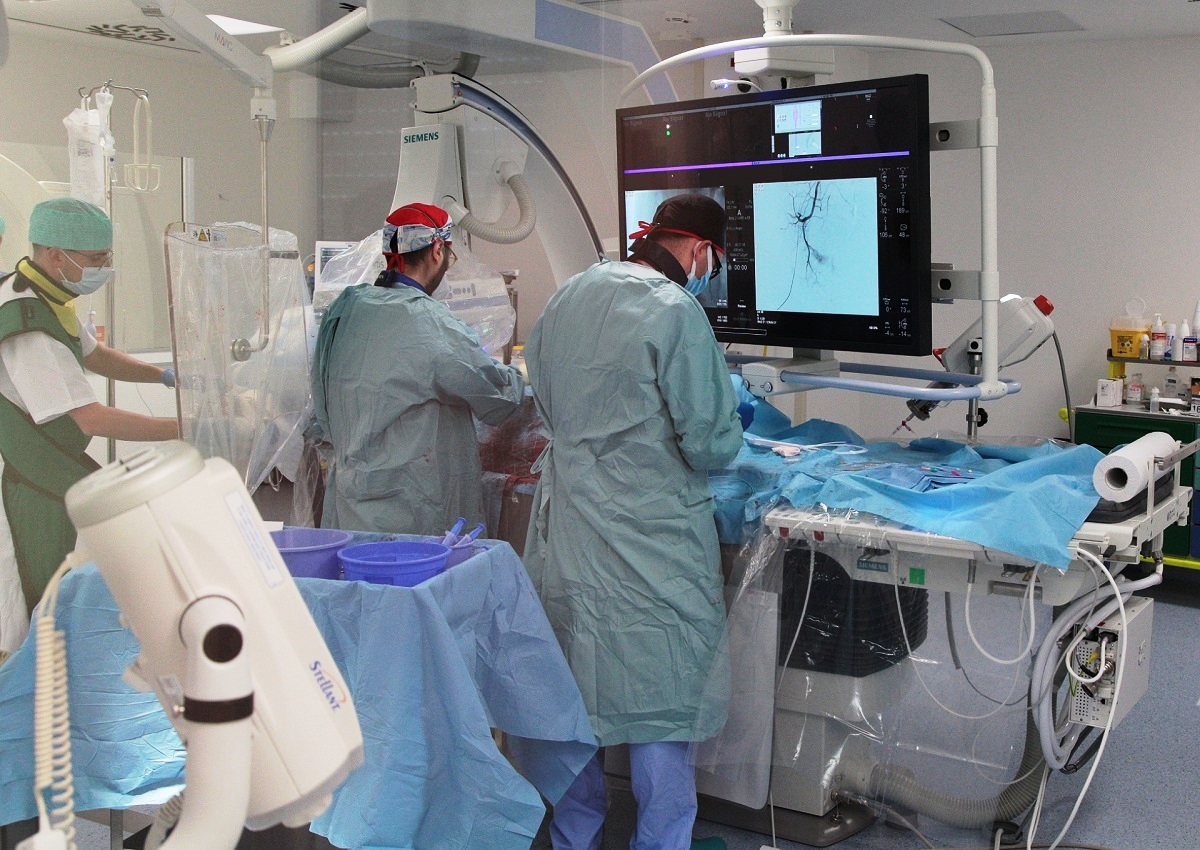
The treatment consists in the introduction through the artery, usually the femoral, of catheters (small tubes) that carry in the peripheral arteries resorbable embolizing substances, which go to close the vessels of the microcirculation that feed the tissue inflammation.
The effectiveness of the treatment depends on each individual case and has a variable duration (from several months to one year), but it can be repeated.
This process is made possible not only by the high specialization of Rizzoli staff, but also by the presence in the Institute of an angio-suite room: acquired thanks to an investment of 2 million euros, it is equipped with a digital angiograph, a CT (Computed Tomography) 128 layers with double energy and an ultrasound for the localization of the most superficial anatomical structures.
"At the moment we treat with TAME only inflammatory forms that do not have a certain indication of surgical treatment for the prosthesis or in which the intervention is not recommended" - says Dr Giancarlo Facchini, responsible for the angiographic interventional radiology of the Rizzoli Diagnostic and Interventional Radiology facility directed by Dr. Marco Miceli - Among these patients, the treatment is not applicable to all: is considered if the other 'standard' options (besides surgery, infiltrations, physiotherapy etc...) are not feasible or have not had positive results. This technique is an additional option, already supported by international scientific publications, to be performed only after considering the other treatment solutions and after careful specialist evaluation."
The path that can lead to the use of TAME follows a well-established process, which involves first an orthopedic visit, then a multidisciplinary evaluation among specialists and finally - if this option is considered appropriate - consultation and feasibility assessment of the team of interventional radiologists angiographers.
"The Rizzoli Orthopaedic Institute is also at the forefront in the development of this new minimally invasive, safe and effective technique, in cases where it is indicated" - says Andrea Rossi, general manager of Rizzoli.
In particular, in younger patients, microembolization can delay prosthetic replacement surgery, and may also be useful in the case of older adults, for which the risk in the operating room may be too high or have less chance of functional recovery."