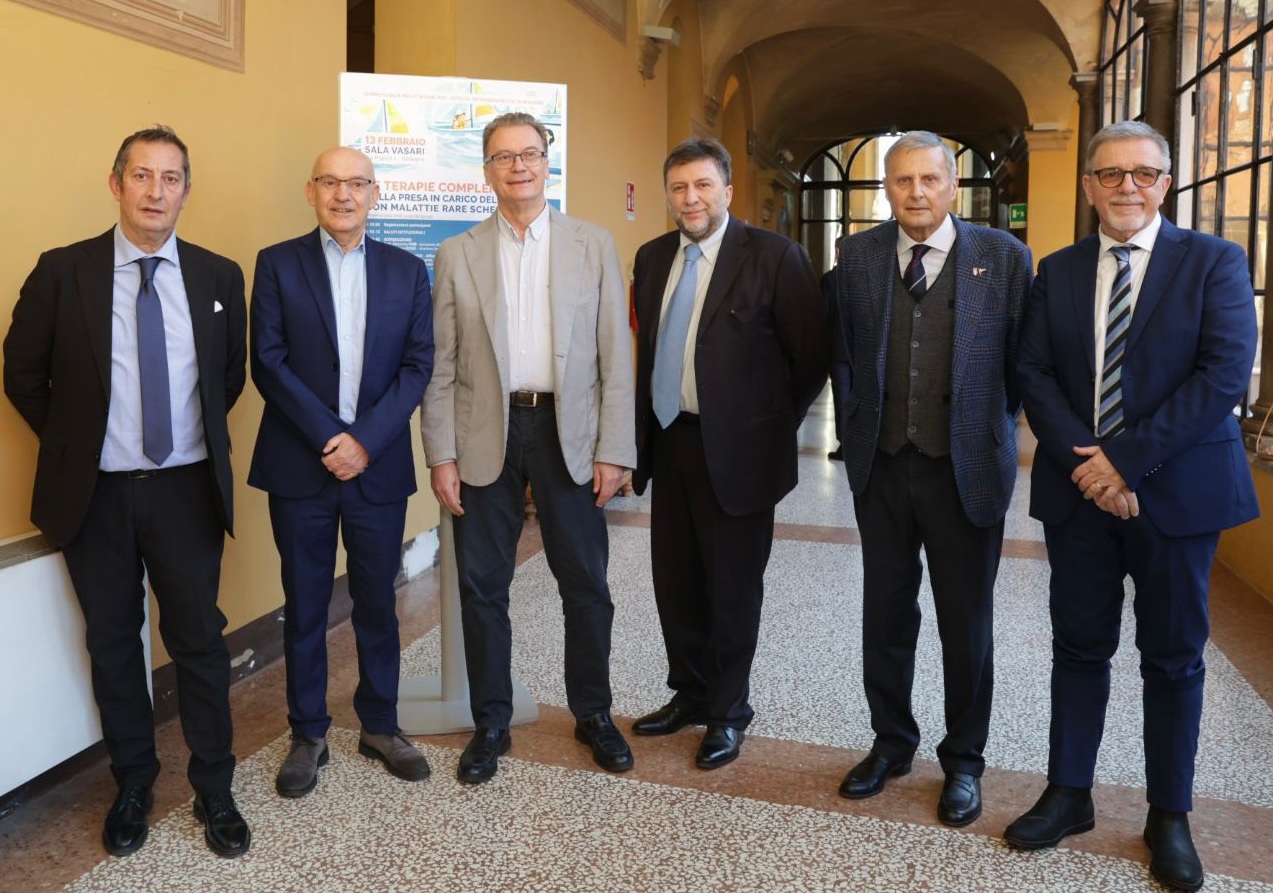
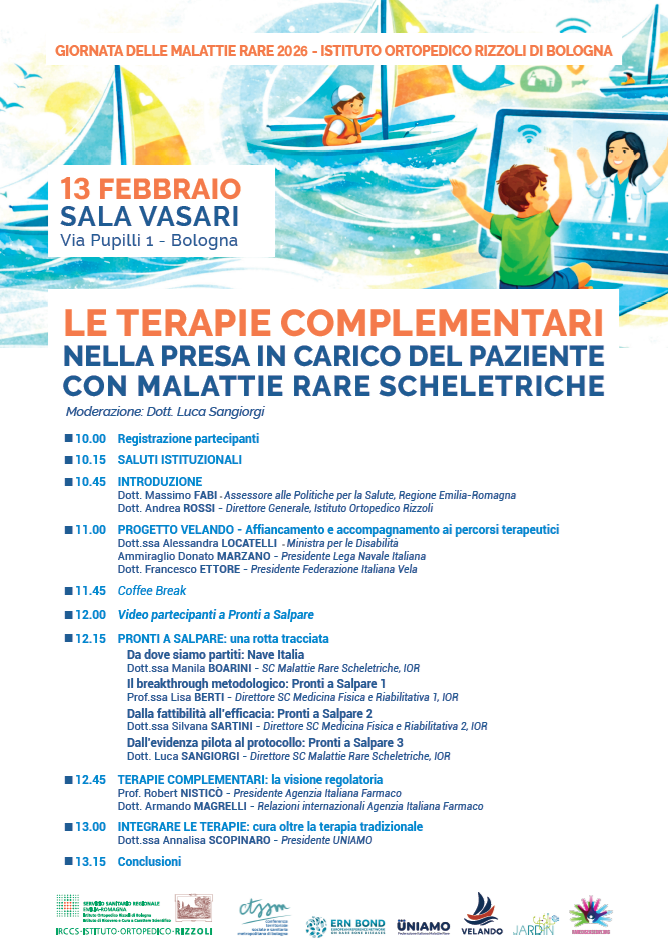
Rizzoli presents the results of the experimental projects with Minister Locatelli, Regional Health Councilor Fabi, and AIFA
February 6th, 2026The sailboat improves movement and improves psychological state: it is the data collected on adolescents between 12 and 18 years old who participated in the pilot phase of the “Ready to Sail” project of the Rizzoli Orthopaedic Institute in Bologna that confirm that sailing activity can positively impact the health of those with rare skeletal diseases.
Tanks to the scientific evidence it has reported, the project is part of the national initiative “Velando” promoted by the Minister for Disability Alessandra Locatelli, who spoke at the presentation organized at Rizzoli on the occasion of Rare Diseases Day events, discussing the progress and prospects of complementary therapies with Massimo Fabi, Councilor for Health Policies of the Emilia-Romagna Region, and Armando Magrelli, Director of the AIFA-Italian Medicines Agency.
The direct consequences of the diseases affected by patients with rare skeletal diseases-hereditary multiple exostoses, Ollier's disease, osteogenesis imperfecta-are bone fragility, deformities, and functional limitations.
The young people who participated in the project, who came from all over Italy, they carried out a program articulated between activities at sea and team building under close monitoring of a series of parameters before and after the experience to measure posture and functionality through inertial motion sensors and to evaluate quality of life and well-being through what in medicine is called pros (patient reported outcomes), that is, patient-reported outcomes of care.
On both categories of parameters, and also on the correlation between them, the data underline a generalized, and measured, improvements even three months after the end of the sailing experience: on the motor benefits front, participants showed significant improvements in balance skills, postural control and walking quality; regarding the psychological impact, the study found a reduction in fear of movement (kinesiophobia) and an increase in levels of well-being and quality of life.
Led at Rizzoli by a team of geneticists, physiatrists and rehabilitators, psychologists, and engineers, coordinated by Luca Sangiorgi, director of the Skeletal Rare Diseases of Rizzoli, the study opens up prospects for new treatment approaches and now aims to define a structured scientific protocol thanks to collaboration with the Italian Naval League and the Italian Sailing Federation, and with the contribution of Uniamo-Federatione Italiana Malattie Rare.
This new phase of activity, inserted into the national context thanks to “Velando”, is crucial for the contribution it can make to the future of complementary therapies, that is, therapies that can complement and accompany traditional therapeutic pathways, and to their evaluation also by AIFA.