
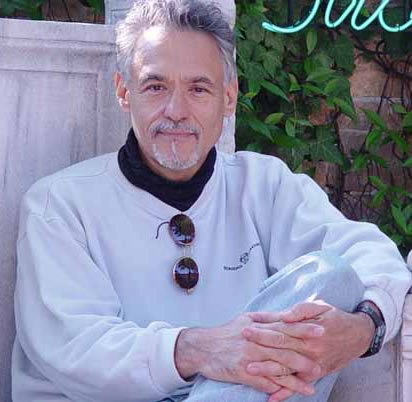
Kenneth B. Marcu, PhD
CV
Qualification
BSc, PhD
Current assignment
Senior Visiting Scientist at Rizzoli Orthopaedic Institute. Molecular Biology (NF-kappaB and functional genomics in vitro and in vivo) targeted to study the pathophysiology of Osteoarthritic disease. Development and use of inducible, cartilage targeted knock-out mice as an in vivo model to study IKKalpha (Inhibitor of NF-kappaB kinase alpha) functions in OA disease invoked by DMM surgery.
Current Permanent Position: Professor of Biochemistry and Cell Biology, Microbiology and Pathology, Stony Brook University, Stony Brook, NY, USA.
Title of qualification awarded
Bachelor of Science in Biology
1972, State University of New York, Stony Brook, USA
Other qualifications awarded
Ph.D in Biochemistry (1975) State University of New York, Stony Brook, USA
NIH Postdoctoral Fellowship, Institute for Cancer Research. Philadelphia. PA. (1975-1978). Molecular basis of immunoglobulin variable region gene diversification and heavy chain constant region gene class switching
NIH Research Career Development Award (1981-1986)
First Oustanding Alumnus of SUNY @ Stony Brook (1983)
Catacosinos Cancer Research Professorship (1987)
Professeur Invite de l’Institut Universitaire de France (Versailles) (1996)
Senior Scholar of Institute of Advanced Study of University of Bologna (2003-2006)
Positions held
99/1978-8/1983: Assistant Professor of Biochemistry, SUNY @ Stony Brook
10/1983-7/1984: Member, Basel Institute for Immunology, Basel Switzerland
9/1983-8/1988: Associate Professor Depts. of Biochemistry, Microbiology and Pathology SUNY @ Stony Brook
9/1988-present: Professor of Biochemistry and Cell Biology, Microbiology and Pathology, SUNY @ Stony Brook
8/1994-8/1995: Poste Orange, INSERM U273, Universite de Nice, France
2/2002-1/2009: Senior Scientist, CRBA Lab, S. Orsola Hospital, University of Bologna, Italy
1/2009-present: Senior Scientist, Istituto Ortopedico Rizzoli, Bologna, Italy
Languages
English (mother language), French (spoken fluent), Italian (some working knowledge)
Technologies
Office, Internet and software packages for graphical or statistical purposes
Teaching activities
9/1978-present: Professor of Biochemistry and Cell Biology, Microbiology and Pathology SUNY @ Stony Brook, USA
Scientific activities
1978- present: Faculty member of the Department of Biochemistry and Cell Biology, Stony Brook University, Stony Brook, NY, USA
1985-1989: Member American Cancer Society Advisory Committee on Proteins and Nucleic Acids
1991-1993 Associate Editor for Journal of Immunology
1991-1994: Member American Cancer Society Advisory Committee on Immunology and Immunotherapy
1991-1995: Member NIH Allergy/Immunology Study Section
1997-1999: Member Scientific Advisory Board of Small Molecule Theraeputics Inc.
2000-2004: Consultant for Boehringer Ingelheim Corporation
2003-2009: Director of research projects on the roles of IKK signaling in response to inflammatory signals invoked by tissue damage. Project collaborator on Notch and NF-kappaB signaling in liver cancer and epithelial-mesenchymal transition (EMT) of breast cancer cells (at the CRBA Laboratory, S. Orsola Univ. Hosp. Univ. of Bologna)
2004-2008: Member of MAIN (Migration and Inflammation) EU FPVI Network of Excellence
2003-present: co-director of research projects on the role of NF-kappaB and IKK signaling in osteoarthritic disease (at the Rizzoli Institute)
2010-present: Member of FORTH Biomedical Research Institute (BRI), Ioannina Med School, Greece [http://www.bri.forth.gr/research_groups/kolettas.html]
Member of the American Association of Immunologists, the American Society of Microbiology, the American Association for the Advancement of Science and OARSI (Osteoarthritis Research Society International)
REVIEWER OF SCIENTIFIC JOURNALS:
Arthritis And Rheumatism, Osteoarthritis and Cartilage, Cell, Science, EMBO J, Molecular and Cellular Biology, Journal of Leukocyte Biology, Journal of Biological Chemistry, Proceedings of the National Academy of Sciences (USA), Genes and Development., Journal of Immunology, Oncogene
140 publications in Journals with IF
Clinical and/or Scientific interests
Gene expression programming in extracellular inflammatory and intracellular stress-like signaling. Molecular basis of OA, cancer and cellular senescence in response to DNA damage and cell migration in response to tissue damage